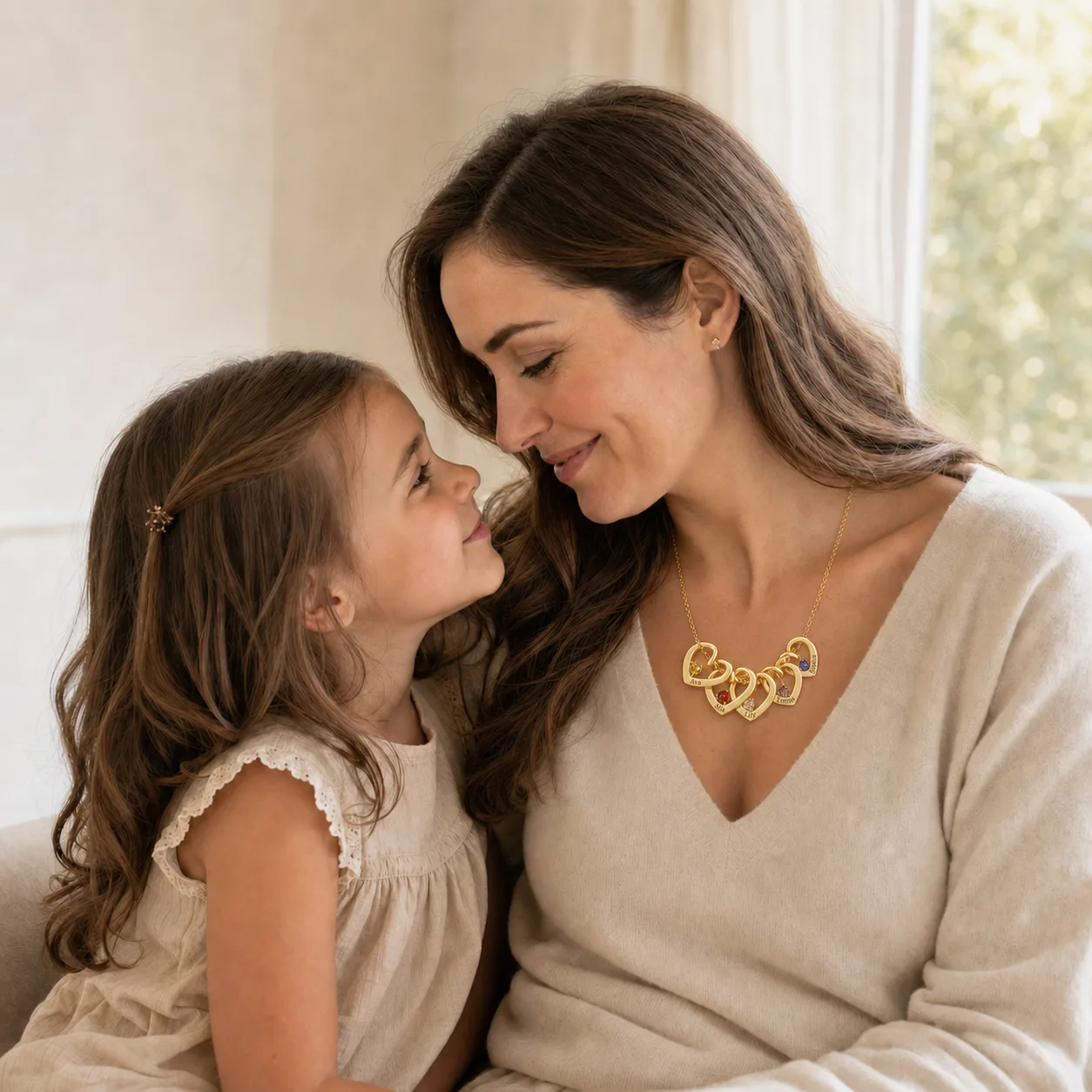
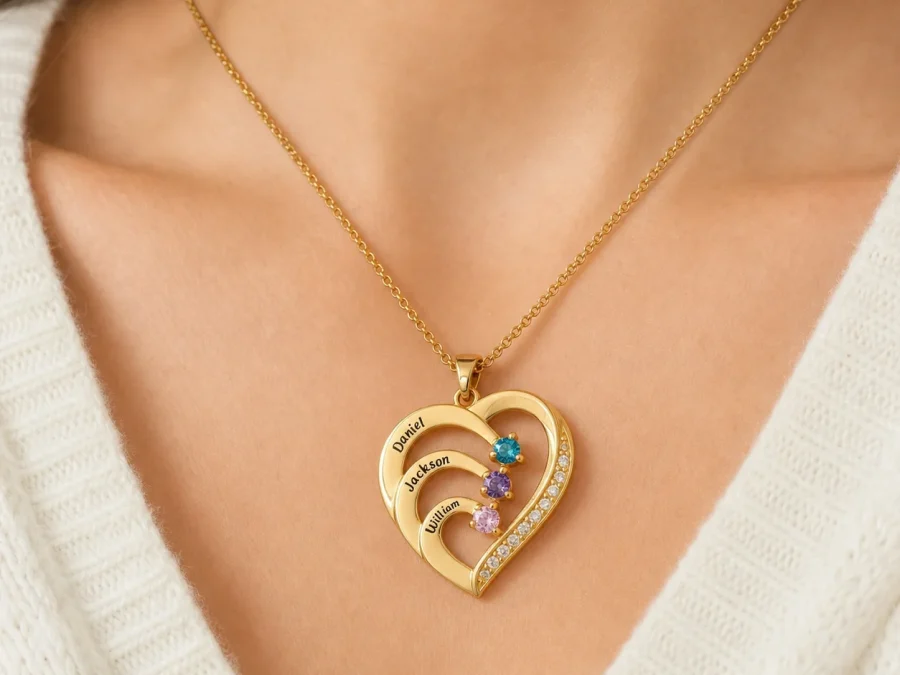
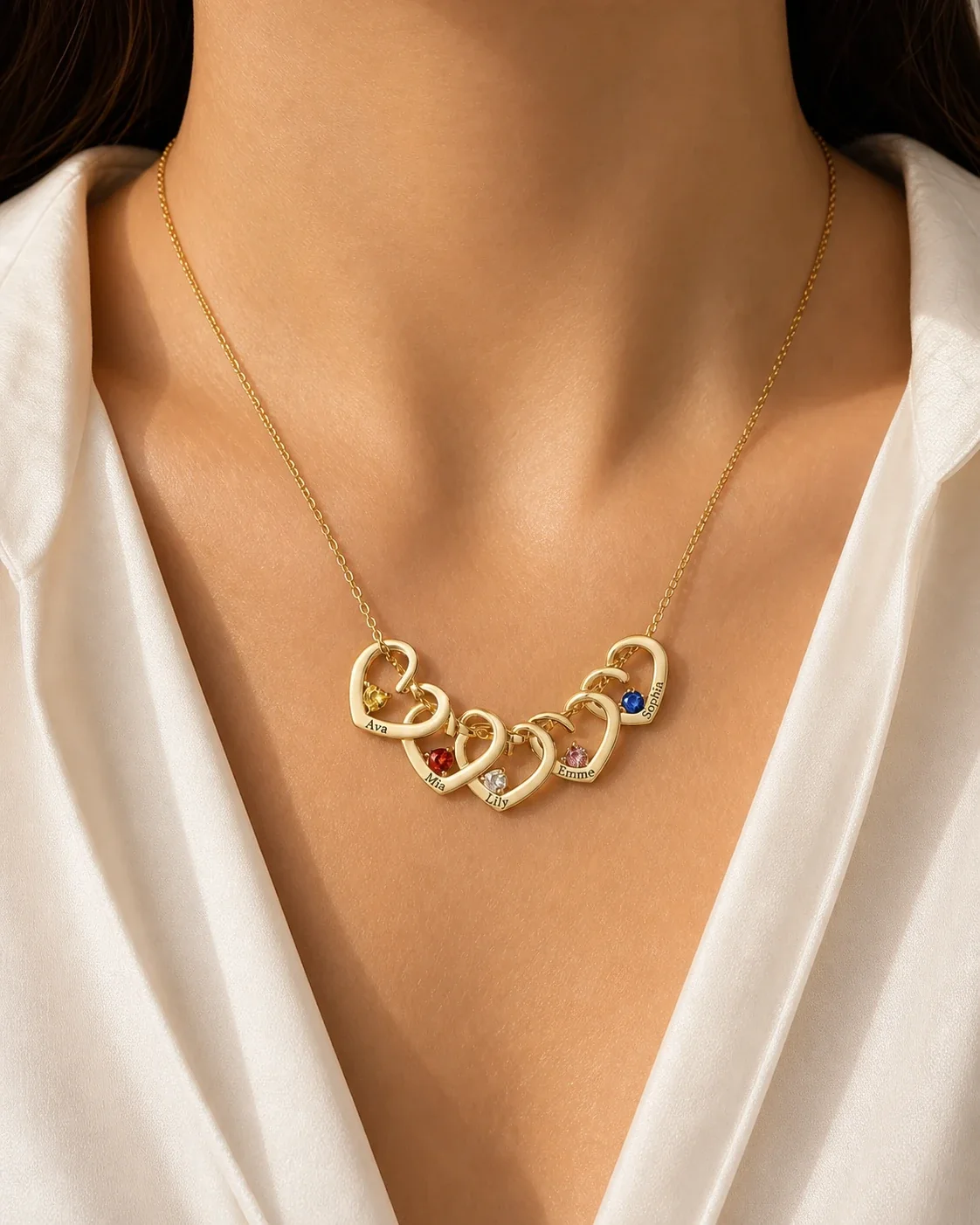
Mother-Daughter Jewelry: How to Choose a Meaningful Matching Gift
A thoughtful guide to choosing mother-daughter jewelry that feels connected, personal, wearable, and true to the relationship behind the gift.
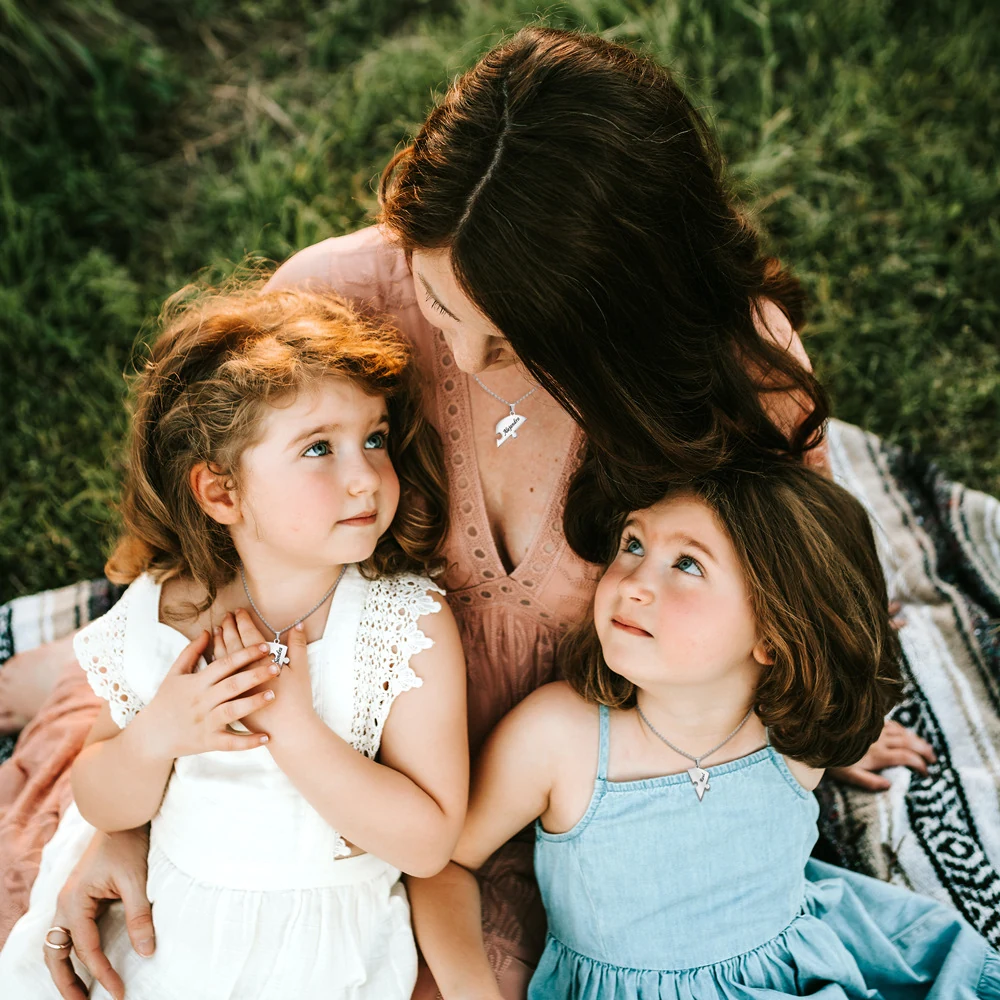
Mother-daughter jewelry can mark a relationship without asking two people to dress exactly alike. The strongest matching gift is not simply the same necklace in two boxes. It is a design with a shared idea, a personal detail for each wearer, and a shape both people will genuinely want to keep in their everyday rotation.
Whether you are choosing a gift for a mother and young daughter, an adult daughter and her mom, or several generations, the process becomes easier when you decide what should connect the pieces and what should remain individual.
Begin with the relationship, not the trend
Before comparing finishes or pendant shapes, name the reason for the gift. A birthday can celebrate who someone is now. Mother’s Day may focus on gratitude. A graduation can recognize a new chapter while keeping home close. A new baby can turn mother-daughter jewelry into a first family keepsake.
This purpose helps you choose an engraving that will still feel relevant after the occasion has passed. Initials, familiar names, a meaningful short word, or a birth month usually age more naturally than a phrase tied to one season or social trend.
Choose how the pieces should match
Matching does not have to mean identical. There are three useful ways to create a visible connection.
One design divided into personal pieces
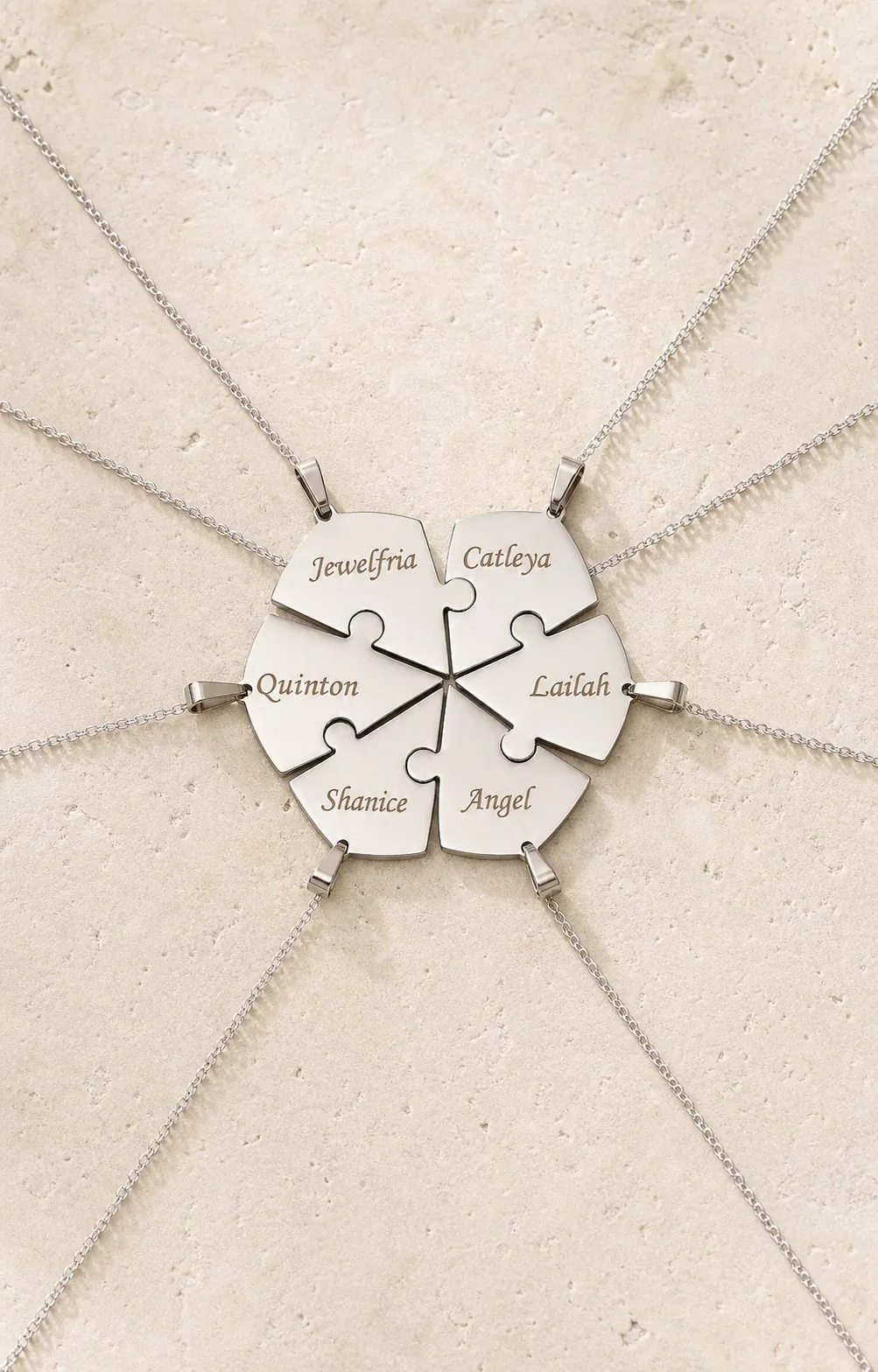
Interlocking or puzzle-heart necklaces make the relationship part of the silhouette. Each person wears one engraved section, and the pieces form a complete shape when they are brought together. This is especially meaningful for people who live apart because the jewelry makes both connection and distance visible.
The Together Heart Puzzle Necklace follows this idea. Review the current product page before ordering so the supported number of pieces, engraving positions, finish, and chain length match the people in your gift.
The same symbol with individual details
Two people can wear the same heart, circle, or teardrop shape while choosing different names, stones, or finishes. This gives the gift a coordinated look without making either person feel as though she is wearing someone else’s jewelry.
Complementary pieces rather than identical ones
A necklace for one person and a bracelet for another can still belong together when they share a finish, birthstone color, or engraving. This option works well when the wearers have different routines. Someone who rarely wears necklaces may enjoy an adjustable wrist piece, while another person may prefer a pendant she can layer with an existing chain.
Give each wearer one detail that belongs to her
A shared motif carries the relationship; the personalization should identify the individual. You might place each person’s own name on her piece, exchange names so each person carries the other, or use initials when the engraving space is small.
If birthstones are part of the design, decide whether each wearer should carry her own month or the other person’s. Neither approach is more correct. The important step is writing the intended pairing down before checkout and confirming it against the personalization map shown on the product page.
For more engraving approaches, use the practical examples in what to engrave on a family necklace.
Keep age and everyday wear in mind
Jewelry for an adult and jewelry for a child should not be chosen from appearance alone. Consider chain length, pendant scale, fastening, daily activities, and whether the wearer is ready to care for the piece. Follow age guidance supplied with the product, and supervise children around small jewelry components.
For adults, look at the jewelry they already reach for. A person who wears small pendants may prefer a quiet engraving. Someone who layers several necklaces may appreciate a visible heart on a longer chain. The most wearable finish is usually the metal tone already present in her favorite earrings, watch, or rings.
Decide whether the finish should match
Using the same finish creates the clearest visual connection, but it is not mandatory. Silver tone may suit one wardrobe while gold tone feels natural for another. Keeping the motif consistent and allowing each person to choose her familiar finish often produces a more thoughtful result than insisting on a perfect match.
When the gift is a surprise, look at the hardware and jewelry each person wears most often. Do not rely on the color that looks strongest in a close-up product photograph. A finish should fit real life, not only the presentation box.
Review the engraving at actual scale
Product photography enlarges small details. Before ordering, check the listed pendant measurements and remember that a readable short name can be more successful than a long message compressed into a small area. Confirm spelling, capitalization, accents, and name order exactly as they should be made.
If the design has several pieces, write a simple assignment list:
- Wearer one: piece, engraving, finish, and chain choice.
- Wearer two: piece, engraving, finish, and chain choice.
- Any additional wearer: the same four details in the requested order.
This small step prevents a meaningful idea from becoming an avoidable ordering error.
Plan the moment of giving
A matching gift becomes more personal when the recipient understands the choice. Add a short note explaining what connects the pieces and why you selected the engraving. If the jewelry is for people in different places, decide whether to send the pieces separately or bring everyone together before opening them.
Because personalized jewelry is prepared from submitted details, leave enough time for making and delivery. Amorieva currently asks customers to allow approximately 10-15 days for both. Review the latest information on shipping and returns before choosing the date of the celebration.
A final mother-daughter jewelry checklist
- Choose the relationship or milestone the gift should represent.
- Decide whether the pieces will be divided, identical, or complementary.
- Assign every engraving and birthstone to the correct wearer.
- Check the supported number of pieces and all product measurements.
- Select finishes each person already feels comfortable wearing.
- Confirm spelling, capitalization, and engraving order.
- Allow time for personalization and delivery.
- Add a note that explains the meaning behind the match.
When you are ready to compare formats, explore the Amorieva family jewelry collection. The right mother-daughter jewelry should look connected when the wearers are together and still feel complete when each person wears her piece on her own.